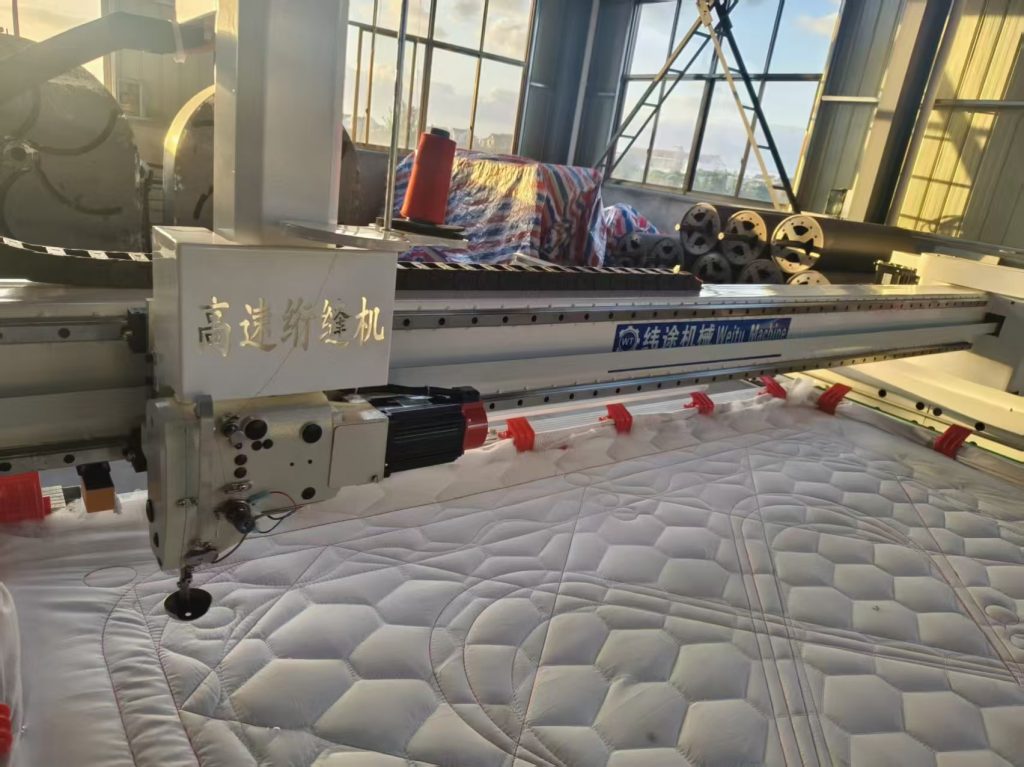
A single needle quilting machine is a type of sewing machine designed specifically for quilting. It uses a single needle (as opposed to multi-needle or specialized machines) and is typically used for stitching quilt layers together. This type of machine is popular among quilters who prefer a more controlled, manual approach to their quilting projects, especially for tasks like straight-line quilting, free-motion quilting, or even small, detailed stitch work.
2.Feed Dogs: They have feed dogs (the mechanism that moves the fabric) that help with smooth movement, which is essential for quilting projects.
3.Wide Throat Space: Many quilting machines have an extended throat space (the area to the right of the needle) to give you room to maneuver large quilts.
4.Stitching Styles: They may offer different stitching options such as straight stitches, zigzag stitches, and the ability to do free-motion quilting with the right foot attachment.
5.Speed Control: These machines often feature speed control to help quilters have better precision, especially when quilting intricate designs.
6.Walking Foot: Many single needle quilting machines are compatible with a walking foot, which helps keep the quilt layers from shifting while you stitch.
Pros:
•Precision: Ideal for quilters who want to control the stitch pattern and style.
•Affordability: Compared to multi-needle machines, single needle machines are generally more affordable.
•Versatility: They can handle a range of quilting techniques, including straight-line, free-motion, and decorative stitching.
Cons:
•Slower: They may be slower than industrial or multi-needle machines, especially for larger quilting projects.
•Smaller Projects: While these machines work for most standard quilt sizes, they might not be ideal for very large quilts or heavy-duty, high-volume quilting.





 Links:

 ZH
ZH  EN
EN  AZ
AZ  BE
BE  ES
ES  AR
AR 